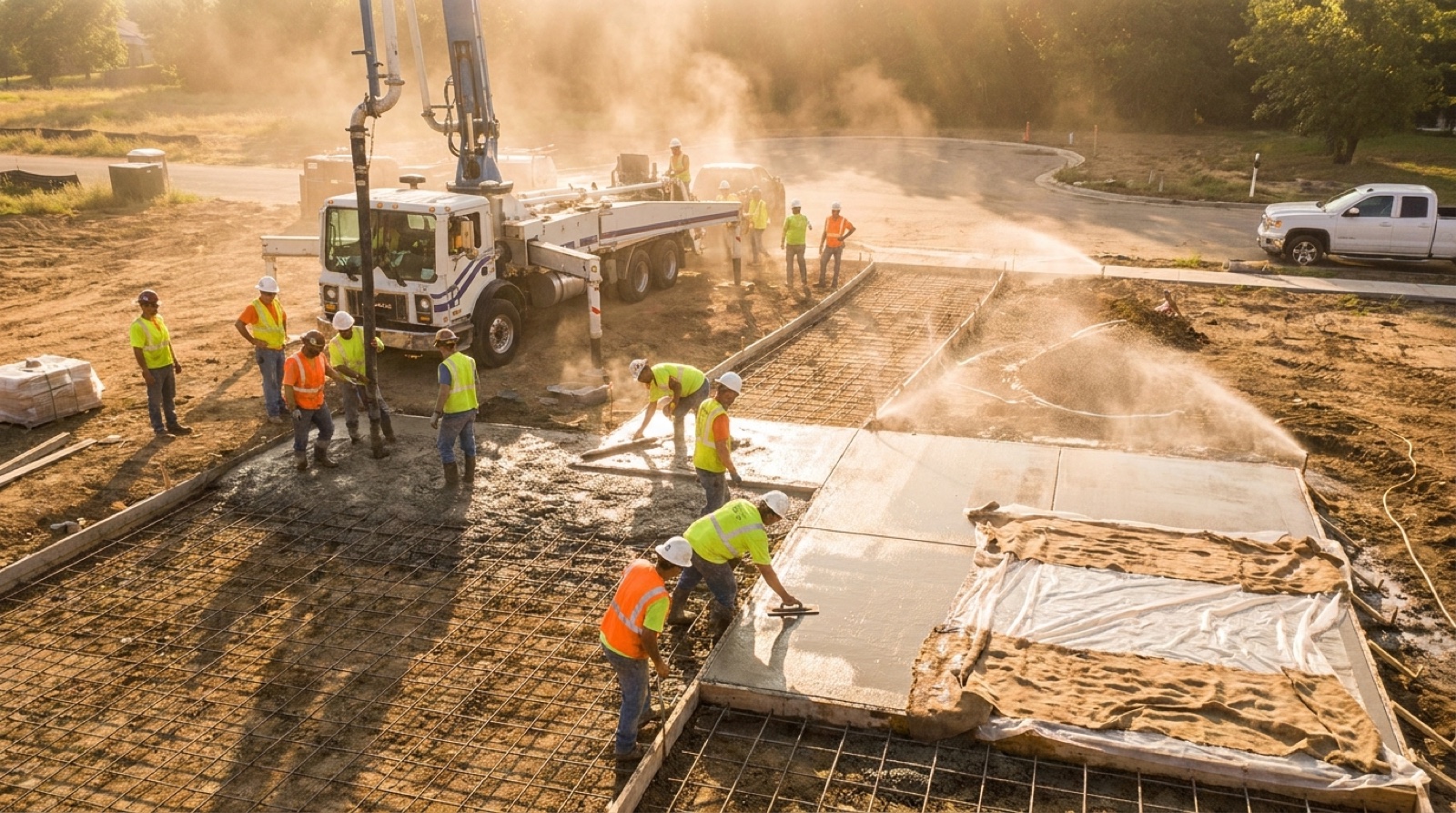
A slab poured on a 97 degree afternoon in Colorado Springs can lose surface water faster than the mix can use it, and that is exactly how you get a driveway that spiderwebs in its first month. The fix is not a better mix. It is a better schedule.
The heat that made news on August 8
During the Tacos and Tequila Festival at UCHealth Park, Colorado Springs firefighters treated 72 people for heat-related illness and took several to hospitals for dehydration and related symptoms. A heat advisory was in effect and the high reached 97 degrees, as the Colorado Springs Gazette reported.
Crowds have the option of finding shade or leaving. A slab that got placed that same afternoon did not.
Why 97 degrees is a problem for a fresh slab
Concrete does not dry. It cures, which is a chemical reaction that needs water to stay in the mix for days, not hours.
When hot air, low humidity, and direct sun strip that water off the surface too quickly, the top skin stiffens while the body of the slab is still soft. The result is plastic shrinkage cracking, a weaker wear surface, and a lot less time for the crew to finish properly.
Colorado Springs stacks several of those factors at once:
- Thin, dry air at roughly 6,000 feet of elevation, which speeds evaporation
- Strong high altitude sun that heats a slab well past the air temperature
- Afternoon wind coming off the Front Range
- Hot subgrade and hot forms that pull heat into the mix from below
The concrete industry has an entire hot weather practice standard, ACI 305, because these conditions are predictable and manageable. They are only a disaster when nobody plans for them.
The hot weather checklist we run
| Condition | Risk to the slab | What changes on site |
|---|---|---|
| Air above 90 degrees | Rapid set, short finishing window | Pour at first light, finish before noon |
| Low humidity | Surface water leaves before curing starts | Evaporation retarder, fog misting |
| Steady afternoon wind | Evaporation climbs sharply | Windbreaks, larger finishing crew |
| Hot, dry subgrade | Base drinks water out of the mix | Dampen the base before placement |
| Full sun exposure | Top skin sets ahead of the slab body | Shade cloth, chilled mix water |
None of this is exotic. It is scheduling, staffing, and water discipline.
How we change a summer pour
Start before the sun does
Most of our July and August work in Colorado Springs, Fountain, and Monument starts at or before sunrise. Placing and finishing while the air is in the sixties buys hours of working time that a 10 a.m. start simply does not have.
Protect the water in the mix
Adding water on site to make hot concrete easier to work is the single most common way a driveway gets weakened. We manage workability with mix design and timing instead, so the slab reaches its intended strength.
Cure longer than feels necessary
A slab that looks hard by dinnertime is nowhere near finished curing. Wet curing, curing compound, or blankets over the first several days is what separates a driveway that lasts decades from one that starts crazing in year one.
Damage you can probably already see
Walk your property and look at the slabs poured during past summers. Fine cracks that look like dried mud, a chalky or sandy surface, and edges that crumble under a boot heel are all signatures of a pour that lost its water too early.
Caught early, that is usually a resurfacing or crack and spall repair job rather than a teardown. Left through a few El Paso County freeze and thaw cycles, water gets into those cracks, expands, and turns a cosmetic issue into a structural one.
Surfaces that live better through a Front Range summer
Color matters more than most homeowners expect. Dark integral colors and dark sealers absorb noticeably more heat, which is worth thinking about for a barefoot area.
For patios and outdoor living areas, lighter tones and a broom or textured finish stay usable in the afternoon. If you want pattern and color without the heat penalty, stamped work in mid range tones is a reasonable middle ground.
Front walkways and entry paths take the most direct sun of anything on a typical lot, so they are worth specifying carefully rather than matching the driveway by default.
Late August is still good pouring season
Overnight lows in Colorado Springs start easing in the back half of August, and September is one of the best concrete months we get all year. Waiting until October is when you start gambling against early cold snaps and the temperature floor for placement.
If you have a driveway, patio, or walkway on the list for this year, now is the point where scheduling still works in your favor. Get in touch for a quote or call (719) 666-9608, and we will build the pour date around the weather instead of against it.