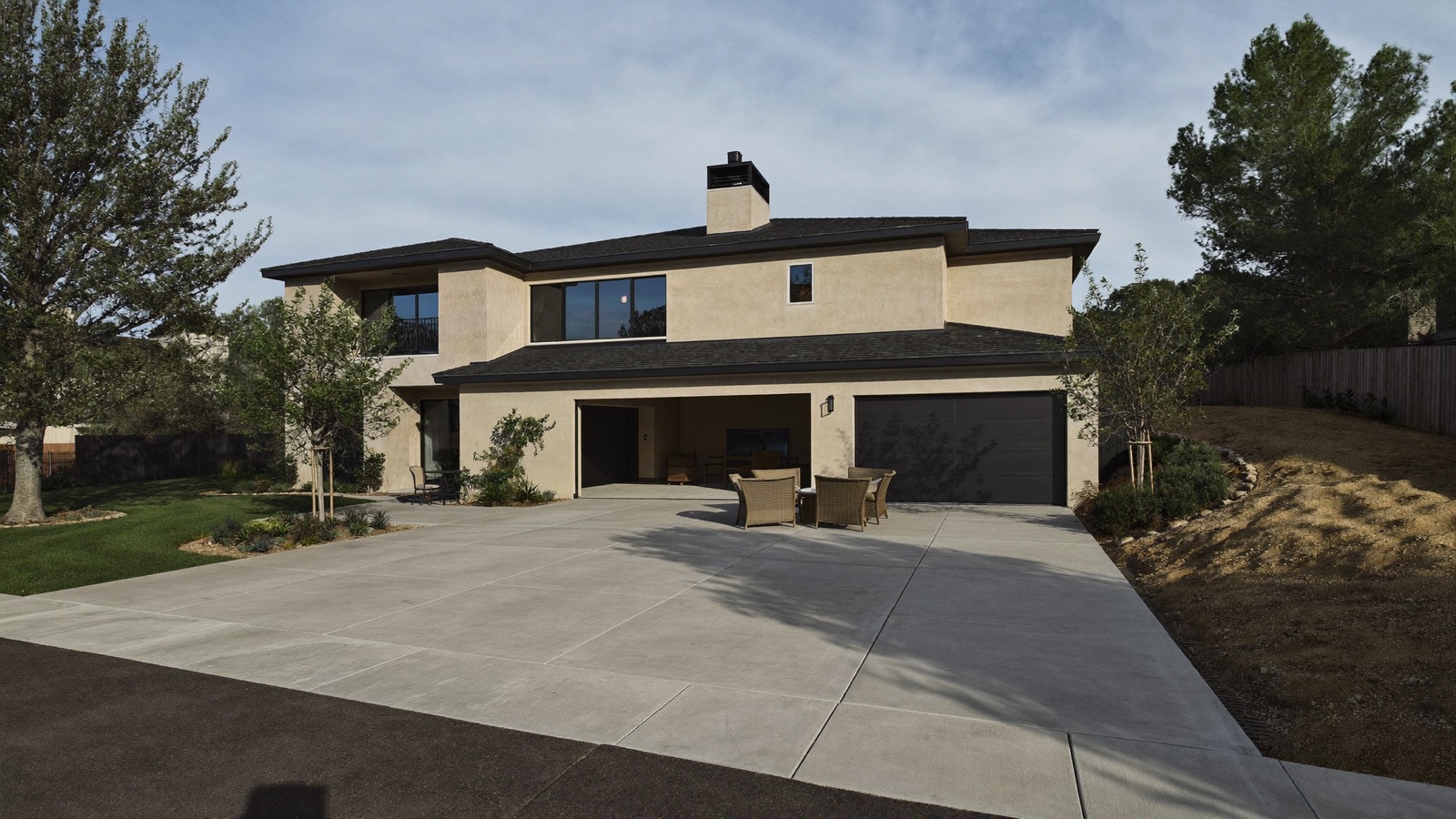
The first five feet around your house should not be able to burn. In El Paso County that usually means gravel, bare mineral soil, or concrete flatwork, and concrete is the only one of the three that also functions as a walkway.
That is the practical takeaway from a fire that most people around here experienced as a traffic delay.
What Happened Near Baptist Road
On Monday, July 13, 2026, firefighters knocked down a grass fire burning on the west side of Interstate 25 south of Baptist Road, north of Colorado Springs. Crews reopened southbound lanes shortly after 2 p.m. after a closure that backed traffic up in both directions.
The fire covered 4.1 acres inside the Monument Fire District. Monument Fire District Chief Andy Kovacs said the cause was under investigation, and crews from Monument, Colorado Springs, the Air Force Academy, Larkspur, Palmer Lake and El Paso County all worked the incident, according to reporting from the Colorado Springs Gazette.
Four acres is small. What matters is the setting: dry summer grass, a wind corridor, and homes on the other side of it.
Why the First Five Feet Decide So Much
Most homes lost in grass and brush fires are not hit by a wall of flame. They ignite from embers landing in something combustible right against the structure.
That is bark mulch under a window, a wood deck skirt, dry needles in a gravel bed, or juniper planted against the siding. The fuel next to the wall is the problem, not the fuel a hundred yards out.
Front Range fire agencies consistently push the same idea for that zone. Keep it lean, keep it clean, and keep it noncombustible.
Where Concrete Actually Helps
Concrete does not burn and does not carry embers. A poured surface in the right place removes fuel permanently instead of requiring seasonal cleanup.
| Area | Common fuel | Concrete option |
|---|---|---|
| 0 to 5 ft from walls | Mulch beds, dry grass | Perimeter flatwork or a poured border strip |
| Side yard runs | Weeds, needle litter | A poured walkway that connects front to back |
| Rear entertaining area | Wood deck, dry lawn | A slab patio in place of a wood deck |
| Driveway and parking pad | Gravel with grass growing through | A poured drive that doubles as a break |
| Sloped lot edges | Loose brush on the grade | Terracing with masonry or concrete |
A wide, well maintained concrete driveway also gives fire apparatus somewhere to stage. That matters on the narrow, steep approaches common in Monument, Black Forest and the west side of Colorado Springs.
Retaining Walls Do Double Duty
On a sloped lot, fire moves uphill fast. Terracing a grade breaks that run and gives you a maintained, planted band instead of a continuous brush face.
We build retaining walls for drainage and usable yard space most of the time. On foothill lots the fire behavior benefit is a real secondary reason to do it.
Where Concrete Does Not Help
A slab is not a shield. If your gutters are packed with needles and there is a woodpile against the garage, new flatwork changes nothing.
Cracked and separated concrete is also a liability rather than an asset. Embers collect in open joints, weeds root in them, and dry weeds against a foundation are exactly what you were trying to eliminate.
Colorado Springs freeze and thaw cycles pull slabs apart faster than most of the country. If your existing walkway has open cracks or heaved sections, sealing and repairing what is there is usually the higher value job before anything new gets poured.
A Short Walk Around Your Own Property
You can do this in ten minutes with no tools. Start at a corner of the house and walk the full perimeter.
- Is there anything within five feet of the wall that would carry a spark
- Are joints and cracks in existing slabs open enough to hold litter
- Does the side yard between the fence and the house have bare dry ground
- Can a truck get within reach of the structure
- Do downspouts dump water where it undermines a slab or a foundation edge
That last one matters more than people expect. Water that pools against the house feeds settlement problems, and settlement problems eventually show up as the same open joints you were just told to close.
Doing It Once, Properly
Perimeter flatwork is not glamorous work. Done right it means correct base prep, control joints placed at sane intervals, and a slope that moves water away from the structure rather than into it.
Done poorly it cracks in three winters and you are back where you started, with weeds in the joints and a bill already paid.
We work across Colorado Springs, Monument, Fountain, Pueblo and the rest of El Paso County, and we would rather look at a lot in July than after a bad August. If you want an honest read on whether your perimeter needs work, get in touch for a quote or call us at (719) 666-9608.