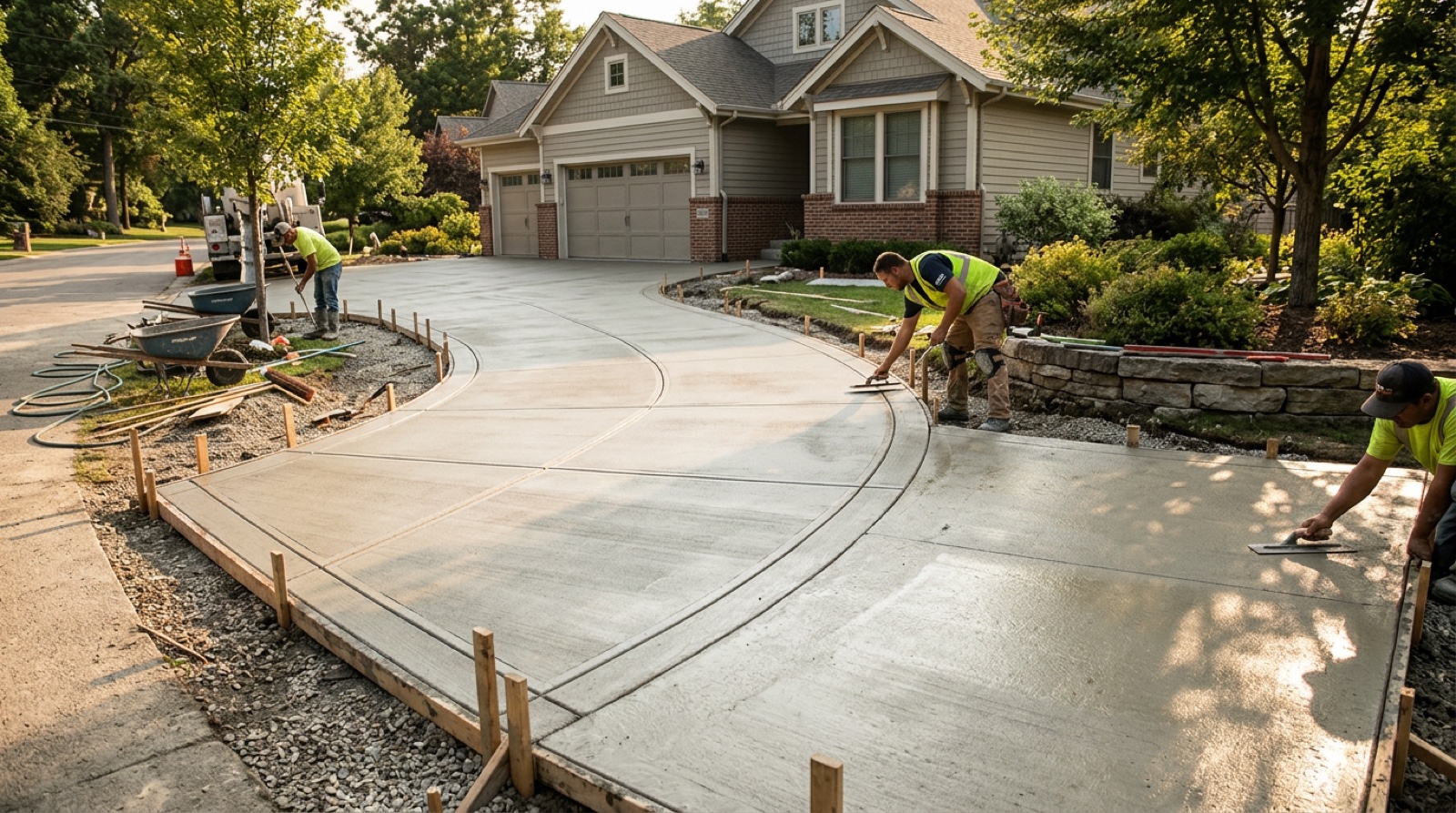
Book your pour now if you want it done before winter
A large commercial project on the north side of Colorado Springs just cleared its biggest permitting hurdle. That has a direct effect on how quickly a residential crew and a ready mix truck can get to your address this fall.
If a driveway, patio, or slab repair is on your list for 2026, the practical deadline to start the conversation is now, not in October.
What happened with Project Taurus
On July 23, 2026, the Colorado Springs Planning Commission voted 6 to 2 to deny every appeal filed against Project Taurus, the data center proposed by developer Raeden for the former Intel site near Garden of the Gods Road and Centennial Boulevard. The hearing ran more than 14 hours.
The commission attached conditions, including a cap of 50 megawatts of power use unless the developer returns for further approval, plus utility reporting and expanded noise monitoring. Colorado Public Radio reported the decision and the conditions the day after the vote.
Opponents have said they plan to take it to City Council, so the outcome is not settled. Suppliers and subcontractors, though, start staging capacity as soon as a project looks likely.
Why one commercial job moves the residential calendar
Concrete is the most local building material there is. Ready mix has a usable life of roughly 90 minutes from batch plant to chute, which means every yard poured in El Paso County comes from a handful of nearby plants.
When a big site takes the early morning slots at those plants, residential work gets pushed to later loads or to a different day. In July and August that is not a small difference.
An afternoon pour in Colorado Springs heat sets faster, gives finishers less working time, and demands more attention to curing. Good crews will refuse the slot rather than place a slab they cannot finish properly.
What the squeeze actually looks like
- Lead times stretch from a couple of weeks to a month or more
- Fewer open days to reschedule when a storm rolls off the Front Range
- Skilled finishers get pulled toward steady commercial work
- Jobs that slip past mid October start fighting overnight freezes
The realistic pour window in El Paso County
Elevation and swing temperature drive the calendar here more than the calendar itself does. This is how the rest of 2026 tends to break down for flatwork.
| Period | Typical conditions | What it means for scheduling |
|---|---|---|
| Late July to August | Heat and afternoon thunderstorms | Early morning pours only, plan for wet curing |
| September to mid October | Mild days, cool nights, drier ground | The best window of the year and the first to book out |
| Late October to November | Overnight freezes | Blankets, accelerators, and added cost |
| December to February | Frozen or unstable ground | Limited to repairs, demolition, and planning |
| March to May | Freeze and thaw cycles, wet subgrade | Base prep drives the schedule more than the weather does |
None of that makes a late season pour impossible. It makes it more expensive and far less forgiving.
Where to spend first if you only do one project
When the calendar is tight, sequence matters. Work that protects the structure comes before work that improves the yard.
- Anything structural. Settling, cracking, or water pooling against the house belongs with foundation and slab work before anything decorative gets considered.
- Active damage. Spalling, heaving, and separated joints spread through a freeze cycle, so repairing damaged concrete now costs less than replacing it in spring.
- Safety surfaces. Lifted or broken walkways and entry paths are a liability and usually a small pour.
- Driveways. A full driveway replacement needs the most cure time before vehicles use it, so it wants the September window.
- Outdoor living. A new patio can wait until spring without much penalty.
Questions worth asking any contractor this summer
Busy seasons hide sloppy work. These four questions separate the crews managing their capacity from the ones simply booking it.
- What time of day will the truck arrive, and what is the plan if it runs late?
- What is the mix design, how thick is the slab, and what base is going under it?
- How will the slab be cured, and how long before I can walk or drive on it?
- Where are the control joints going and when will they be cut?
A crew that answers those in plain language has thought about your job. One that answers with a price only has thought about the invoice.
Getting on the schedule
Project Taurus still has a City Council appeal ahead of it, and no single job books out every plant in the region. The pattern holds anyway, because commercial demand tightens the fall calendar in Colorado Springs every year and 2026 has more of it than usual.
If you know what you want done, tell us about the project and we will price it. We work across Colorado Springs, Pueblo, Fountain, Monument, and the rest of El Paso County, and the office line is (719) 666-9608.